The “Instagram vs Reality” of batteries: Why your battery isn’t delivering its modeled revenue
On 16 April 2026, the 'Theory to Asset Reality' session at the Solarplaza Summit Energy Storage The Netherlands provided a sobering look at the difference between a financial model and an operational battery. While software providers often present attractive revenue curves, the speakers on stage highlighted that hardware architecture and trading agility are the true gatekeepers of ROI.
Key Takeaways
- The performance gap: Theoretical models often overestimate revenue by failing to account for hardware-level inefficiencies. A 'good' optimizer can bridge this gap by delivering 20% to 30% higher performance than conservative benchmarks.
- Architecture matters: The shift from central to string inverters in battery storage can increase tradable power by up to 20% by eliminating single points of failure and improving state-of-charge accuracy.
- The PICASSO compression: The launch of European balancing platforms has compressed ancillary service prices, making multi-market stacking—combining day-ahead, intraday, and balancing—the only viable long-term strategy.
- Maintenance velocity: Operational success is defined by the 'mean time to repair.' Modular systems enable rapid part replacement, keeping assets online and preventing lost revenue during periods of peak volatility.
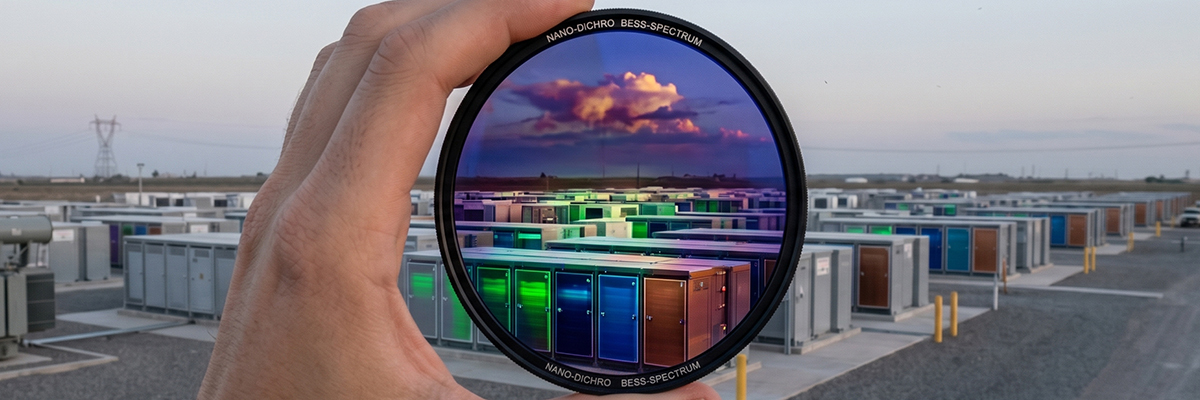
The 'Instagram' of revenue modeling
The session opened with an examination of the theoretical benchmarks that dominate the Dutch market. Koen Broess (S4 Energy) noted that while conservative models - often dubbed the 'Instagram' version of the business case - might project revenues of €300,000 per MW, the 'reality' is far more complex.
Jan Willem Zwang pointed out that many early entrants focused on a single revenue stream, such as the Frequency Containment Reserve (FCR). However, with the go-live of the PICASSO platform, these 'shallow' markets are maturing rapidly. The consensus from the stage was that any model relying on a single market is no longer bankable. To survive, assets must stack revenues across day-ahead, intraday, and imbalance markets simultaneously.
The hardware-level performance gap
A significant portion of the debate focused on why assets fail to hit their targets. Bouke van der Weerdt (Huawei) challenged the industry's return to central inverter architecture, which he compared to old-fashioned Christmas lights: if one bulb fails, the whole string goes dark.
- The Modular Advantage: By using string inverters and rack-level optimization, developers can mitigate the 'bottleneck effect'.
- State-of-Charge (SOC) Accuracy: Inaccurate SOC readings prevent optimizers from bidding their full capacity into the market. High-precision modular systems can unlock up to 10% more tradable energy that is typically 'hidden' in centralized systems to protect the battery.
- Downtime Risk: A failure in a central 5 MW inverter results in 5 MW of lost revenue. A string-based system allows the rest of the container to keep trading while a single module is replaced.
The reality of the 'winter dip'
The session also addressed the seasonal volatility of the Dutch market. Real data from S4 Energy and Flexity showed that revenues can drop by 80% to 85% during the winter months. This 'winter dip' is a structural reality of a market dominated by solar penetration. Developers who fail to account for this seasonality in their cash flow modeling often struggle to meet debt service requirements during Q4 and Q1.
Bridging the gap
The concluding takeaway for investors was clear: 'Reality' is 20% to 30% better than 'Instagram' only if you have the right combination of hardware and software. As Jan Willem Zwang summarized, the market is moving too fast for static models. Success in 2026 requires moving beyond theoretical curves to assets that are designed for redundancy, calibrated for accuracy, and traded with automated, multi-market algorithms.
Want the full data behind these answers?
We’ve captured all insights from the presentations, panels, and deep-dive analyses into our premium Post-show report, covering all the key market intelligence covered during the Solarplaza Summit Energy Storage The Netherlands 2026.

